
Equity release has become an increasingly popular financial solution for homeowners looking to unlock the value tied up in their property. Whether you are planning for retirement, managing rising living costs, or supporting family members, understanding the best equity release interest rates is essential before making any decision.
In this comprehensive guide, we will explore how equity release works, what affects interest rates, how to find the best deals, and how tools like a release equity calculator can help you make informed choices.
What Is Equity Release?
Equity release allows homeowners, typically aged 55 or over, to access some of the money tied up in their homes without having to sell them. The most common type is a lifetime mortgage, an equity release option where you borrow money secured against your property while retaining ownership.
Unlike traditional loans, you usually don’t have to make monthly repayments. Instead, the interest is added to the loan and repaid when the property is sold, usually after you pass away or move into long-term care.
How Do You Release Equity from Your House?
If you’re wondering how to release equity from my house, the process is relatively straightforward but requires careful planning:
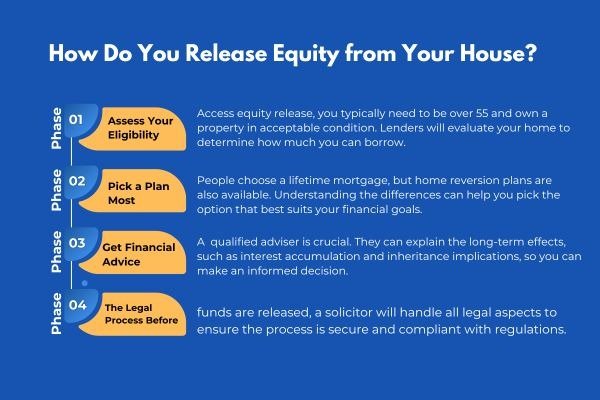
Understanding Equity Release Interest Rates
Interest rates are one of the most important factors when choosing an equity release plan. Unlike standard mortgages, equity release interest is usually compounded, meaning you pay interest on both the original loan and the accumulated interest over time.
Typical Rates in 2026
Equity release interest rates in 2026 typically range between 5% and 7%, depending on the following:
- Your age
- Property value
- Loan-to-value ratio
- Type of plan
- Market conditions
Even a small difference in interest rates can significantly impact the total amount owed over time.
Why Interest Rates Matter So Much
Because most lifetime mortgages don’t require monthly repayments, the interest rolls up over the years. This is known as compound interest, and it can grow quickly.
For example:
- Borrowing £50,000 at 6% could double in around 12 years if no repayments are made.
This is why finding the best equity release interest rates is critical—it can save thousands over the lifetime of the loan.
Types of Equity Release Plans
1. Lifetime Mortgage Equity Release
This is the most popular option. You borrow against your home while retaining ownership. Interest is added over time, and repayment occurs when the property is sold.
Key Features:
- No monthly repayments required (optional in some plans)
- Fixed or variable interest rates
- Ability to release funds as a lump sum or in stages (drawdown)
2. Home Reversion Plans
You sell a portion of your home to a provider in exchange for a lump sum or regular payments, while retaining the right to live there.
Key Features:
- No interest charged
- You receive less than the full market value
- Provider shares in property value growth
How to Find the Best Equity Release Interest Rates
Getting the best deal requires research and professional guidance. Here are some practical tips:
1. Compare Multiple Lenders
Rates vary between providers, so comparing offers is essential.
2. Work with an Adviser
A specialist adviser can access exclusive deals and explain complex terms.
3. Consider Drawdown Plans
Instead of taking all the money up front, a drawdown plan allows you to withdraw funds as needed, reducing the amount of interest accrued.
4. Look for Flexible Features
Some plans let you repay the principal or interest on your own, which helps keep the total cost down.
Using a calculator to figure out how much equity to release
A release equity calculator is a useful tool for figuring out how much you can borrow and how much interest will build up over time.
Advantages of Using a Calculator:
- Quick estimate of how much you can borrow
- A visual breakdown of the value of future loans
- Helps you compare different rates of interest
- Helps with better financial planning
Calculators can give you useful information, but they are only guesses. Always check the details with a financial advisor.
The Good and Bad Things About Equity Release
Advantages
- Get money without having to pay taxes
- Stay inside your house.
- You don’t have to make monthly payments.
- There are choices that are flexible.
Bad things
- Interest can grow very quickly.
- Reduces inheritance
- Could change who can get help
- Paying off early may cost you money. Is Equity Release the Right Choice for You?
Is Equity Release Right for You?
Equity release can be a powerful financial tool, but it is not suitable for everyone. It may be a good option if:
- You are asset-rich but cash-poor
- You want to supplement retirement income
- You prefer not to sell your home
- You have explored all alternatives
However, alternatives such as downsizing, remortgaging, or using savings should also be considered.
Tips to Minimise Costs
If you decide to proceed, here are ways to reduce long-term costs:
- Choose the lowest available interest rate
- Make voluntary repayments if possible
- Opt for a drawdown facility
- Release only what you need
- Review plans with inheritance protection
To make a smart financial choice, you need to know the best equity release interest rates. Equity release gives you flexibility and access to money, but it also has long-term effects that you should not ignore.
If you want to know how to get equity from my house, the answer is to plan carefully, consider your options, and choose one that fits your financial goals.
FAQ
Will I still own my house?
Yes. With a lifetime mortgage, you remain the legal owner of your home.
Can I move home?
Most plans allow moving, but you need the lender’s consent.
What happens if house prices drop?
Many plans include a no negative equity guarantee, meaning you’ll never owe more than your property’s value.
Can I repay early?
Yes, though some plans may charge fees for early repayment.
Do I have to make monthly repayments?
Usually no. Interest rolls up over time and is repaid when the property is sold.
How much can I borrow?
It depends on your age, property value, and the lender’s maximum loan-to-value ratio.
Is the money taxable?
Funds from equity release are generally tax-free.
Will it affect my inheritance?
Yes. The loan and accumulated interest reduce the value of your estate.
Are there alternatives to equity release?
Yes, downsizing, remortgaging, or using savings may be viable options.
Do I need financial advice?
Absolutely. A qualified adviser ensures you understand the long-term effects and helps you pick the best plan.